

In just a couple of years, digital assets have moved from an experimental novelty to an integral part of mainstream finance. This transition has forced finance professionals to rethink how they approach everything, from liquidity and custody to the classification of novel instruments.
For anyone deeply entrenched in the finance world, the question isn’t at all whether digital assets will matter. Instead, it’s how policy will shape the rules of the road, and what that means for accounting, reporting, custody, and compliance functions.
In the sections that follow, we will map where policy is heading, what the biggest friction points are, and concrete actions that finance teams should start taking now. Follow along!
The Current Landscape — Clarity Emerging Among the Chaos
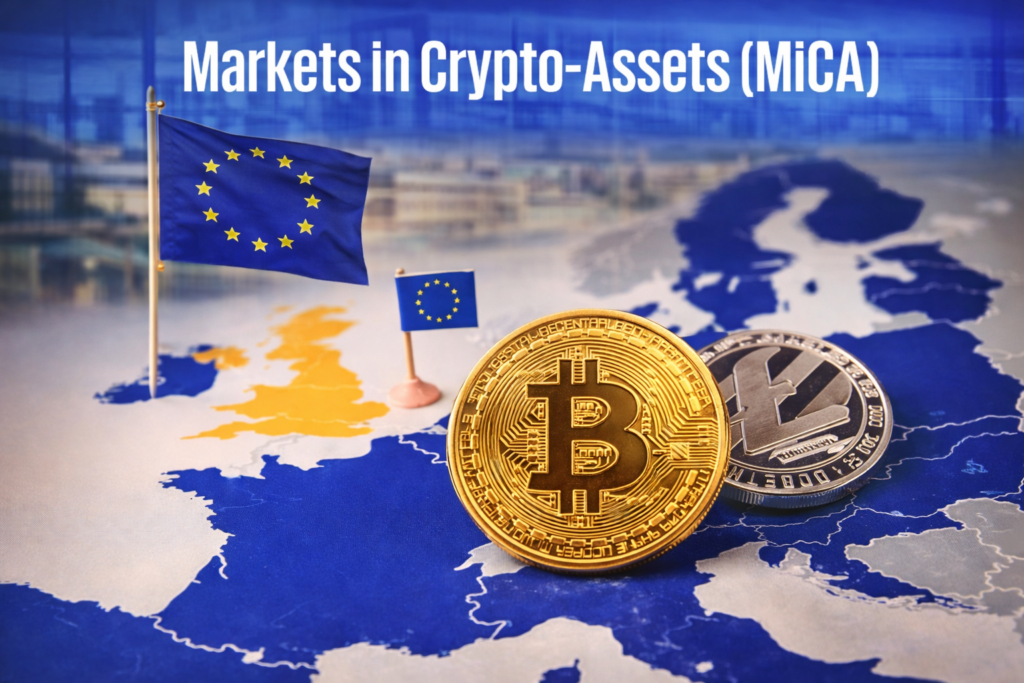
This year has brought about a significant change in the digital asset world — regulators have entered the picture, no longer satisfied to stay on the sidelines.
The European Union’s Markets in Crypto-Assets (MiCA) package is the clearest example of a jurisdiction attempting to enforce comprehensive rules in this space. MiCA entered the legislative timeline in 2023, and its implementing phases have rolled out through 2024–25, creating licensing and operational requirements for crypto-asset service providers across the bloc.
On the other hand, 2025 also saw a push to legislate stablecoins at the federal level in the United States. Policymakers moved beyond enforcement-first tactics to create a statutory framework for payment-stablecoins, with the GENIUS Act (and related measures) being a focal point of that effort. This shift signals Washington’s appetite for a rules-based market structure rather than purely case-by-case enforcement.
All the while, central banks have also become increasingly active in this space. Namely, the Bank for International Settlements and other trackers show the vast majority of central banks are exploring retail or wholesale CBDCs. This type of work shows that banks are moving from research to pilots with real design trade-offs about privacy, offline use, and interoperability.
Finally, enforcement patterns have evolved: after highly visible cases and investigations, several actions were dismissed or settled in 2025, reflecting both legal complexity and shifting enforcement priorities. These moves underline that the enforcement era is still active, but the mechanisms for clarity are now a mix of statutes, agency rulemaking, and negotiated settlements.
What’s Next? Five Policy Themes That Will Define the Next Era
Now that we’ve covered what has been done so far, it is time to explore the directions that digital asset policy will likely take next.
1. Stablecoin Frameworks Will Lead the Pack
Because stablecoins concern payments, liquidity, and bank-like functions, they’re the low-hanging fruit for comprehensive regulation. That is why we expect strict reserve and audit requirements, clear issuer governance rules, and cross-border coordination efforts. All of that will change how treasuries, custodians, and auditors approach stablecoin holdings and reconciliations.
2. Tokenization of Real-World Assets (RWAS) Will Require Custody and Accounting Standards
As bonds, funds, and even private-company equity become tokenized, traditional custody models and trust-law constructs will be stretched. To that end, regulators and standard-setters will likely define custody responsibilities for tokenized instruments and issue guidance on how tokenized securities map to existing accounting frameworks.
3. New Thinking on Liability and Oversight
Nowadays, permissionless finance doesn’t fit neatly into broker-dealer, exchange, or bank boxes. That is why policymakers will likely adopt risk-based approaches (audits, disclosures, certification for high-risk protocols) rather than trying to force a one-size-fits-all solution.
4. AML/KYC and the Travel Rule Will Get Tighter
Next, it is no secret that global efforts to harden AML controls are pushing the industry toward compliance by design. That’s why experts predict the emergence of standardized message schemas, identity attestations, and hybrid on-chain/off-chain proof systems that allow firms to meet regulators without exposing private data.
5. The Battleground of Privacy
Finally, it will be interesting to see whether users and regulators can meet halfway when it comes to privacy. Namely, the former want their data preserved, while the latter want full transparency that will help them detect fraud and systemic risk.
To that end, zero-knowledge proofs, selective disclosure, and carefully scoped privacy carve-outs in regulation are to be expected. This relationship — and how much each side will be willing to give — will be one of the most interesting trends to watch out for in the coming years.
What Will Be the Major Friction Points?

Aside from the themes listed above, it is also important to mention certain areas of digital asset policy that will steer the path the entire industry will take.
For starters, there is the question of defining and classifying assets. Whether something is a security, commodity, or a token is a distinction that matters for reporting, audit scope, and tax treatment. The industry needs functional classification frameworks from standard-setters, and until they arrive, institutions will face inconsistent treatments across jurisdictions.
Second, it is essential to expand policies on custody and operational risk. Numerous questions still remain unanswered, including legal title problems, Multisig (multi-signature) signer compromisation, and bridge exploitations. These questions affect internal controls, SOC audits, and insurance coverages, which is why answering them should be a top priority.
Next, we have to mention the issue of jurisdiction mismatch. Namely, while it is heartening to see so many different policies taking shape across the globe, the fact that they differ vastly can create an issue. MiCA in the EU, evolving U.S. statutes, and varied approaches in Asia and the Middle East will all create a headache for global consolidations, transfer pricing, and cross-border reconciliations.
Finally, it’s difficult not to expect pressure on DeFi to be held more accountable. Auditors, CFOs, and pretty much everyone else despises the word anonymous, which is important in DeFi. Currently, determining responsibility for on-chain protocols is necessary for reserves testing, impairment assessments, and operational risk quantification.
What This Means for CPAs, Auditors, and Finance Pros — Practical Takeaways
For finance teams, the changing regulatory landscape will reshape day-to-day work in very real ways. As digital assets mature, the dividing line between crypto and traditional finance is getting thinner, and that means familiar disciplines like accounting, audit, and compliance are being pulled directly into the conversation.
Accounting
One of the biggest adjustments will come from classification. Digital assets simply don’t fit neatly into existing buckets, and yet financial reporting frameworks still expect clear answers. For this reason, CPAs will increasingly have to look beyond labels like token or stablecoin and instead examine the economic substance of each asset: What rights does it confer? Is there an issuer? Does it behave like cash, a financial instrument, or something entirely new?
This deeper functional analysis is going to become part of routine accounting work, especially as organizations blend tokenized securities, stablecoins, and intangible crypto assets on the same balance sheet.
Auditing
The audit world is facing an equally interesting shift. Auditors are accustomed to tracing evidence through bank statements, subledgers, and traditional custodians. Now, some of the most reliable evidence may live directly on-chain. That’s powerful, especially because blockchains offer immutable histories, but it also requires new skills.
“Financial institutions around the world are increasingly recognising the value of blockchain and stablecoins in modernising how money moves”
Reconciling on-chain activity with organizational controls, evaluating how private keys are safeguarded, and understanding the risks behind bridges, multisignature wallets, or smart contracts will become standard audit considerations. In other words, auditors won’t need to become blockchain engineers, but they will need fluency in the mechanics of how value moves in a tokenized environment.
Tax
Next, tax teams won’t be spared either. Because digital assets can generate frequent taxable events — often in real time — the tax function will have to push for better data pipelines and transaction-level transparency.
Tokenization adds a couple of new wrinkles here. Namely, a tokenized bond may function identically to its traditional counterpart, but it settles differently, moves differently, and may be held in ways that create new cross-border reporting questions. The complexity reinforces the need for closer collaboration between tax, treasury, and engineering teams than has historically been required.
Compliance
Compliance teams, meanwhile, are watching AML and KYC expectations evolve faster than almost any other aspect of digital asset regulation. As the Travel Rule and related global standards tighten, financial institutions will need stronger identity-verification workflows and transaction-monitoring tools that can interpret both on-chain and off-chain data.
However, this isn’t only a regulatory burden. In fact, it’s also an opportunity to rethink legacy compliance systems that were never built for real-time, high-granularity data. The companies that adapt early will likely find themselves with more efficient and automated compliance pipelines than before.
Treasury
Finally, we have to mention treasury, which sits at the intersection of all of these changes. Stablecoins and future CBDCs will alter settlement cycles, liquidity management, and short-term cash strategies.
Therefore, treasury leaders will need to understand not just the creditworthiness of an issuer but also the underlying infrastructure, the reserve requirements, and the contingency plans in place should a stablecoin face stress. That’s a new type of risk surface, one where operational, technological, and financial risks are intertwined.
In conclusion, the evolution of digital-asset policy isn’t pushing finance professionals to reinvent their disciplines, but rather expanding them. The core principles remain the same: verify, document, assess risk, safeguard assets, and provide clarity to stakeholders.
What’s changing is the environment in which those principles are applied. As regulation becomes more structured and digital assets more integrated into everyday financial systems, CPAs, auditors, and compliance teams will find themselves playing a central role in helping organizations navigate this next chapter of financial modernization.
Practical Expectations: What’s Coming In the Next Two Years
Over the next few years, digital asset policy will finally start to solidify, and that shift will have real implications for finance teams. Stablecoins are likely to be the first area where we will see meaningful global alignment, which will give institutions the clarity they need to use them confidently for payments, settlements, and short-term liquidity. That alone will encourage more traditional players toward blockchain-based rails, if only because of the operational efficiency.
Next, CBDCs will continue to progress as well, moving from small pilots to early-stage implementations. After all, central banks will no longer be experimenting in a vacuum. They’re testing features that interact with existing financial systems, meaning that organizations will need to understand how CBDcs fit alongside commercial bank money and private stablecoins.
It’s also expected that regulators and enforcement will continue to run in parallel. Even as new rules take shape, agencies will use enforcement actions to signal expectations around custody, disclosures, and risk management. For finance professionals, those signals will often matter just as much as the upcoming rulebooks.
The bottom line is, the next one to three years won’t bring an overnight transformation to the industry, as that is not feasible. However, they will make digital assets a more ordinary and expected part of financial operations. The companies that prepare now will be the ones shaping how successfully this new infrastructure settles into place.
Conclusion
Whatever the future holds, one thing is for sure: the move from regulatory ambiguity to structured policy will be messy, iterative, and jurisdictionally uneven. For CPAs and finance professionals, the sensible choice is to be prepared for everything.
That includes classifying everything meticulously, building auditable controls, and engaging with standard setters and custodial partners. These steps will reduce risk in the short term and position companies to take advantage of more efficient liquidity as policy finally catches up.
Digital assets are becoming an important part of mainstream finance, and the role of policymakers is to make that integration safe and auditable. For finance teams that treat this shift as a strategic initiative instead of an afterthought, the next few years will be less of a regulatory nightmare and more of an opportunity to modernize how capital is represented, moved, and accounted for.
- https://www.esma.europa.eu/esmas-activities/digital-finance-and-innovation/markets-crypto-assets-regulation-mica
- https://www.congress.gov/bill/119th-congress/senate-bill/1582/text
- https://www.bis.org/publ/bppdf/bispap159.htm
- https://www.sec.gov/newsroom/press-releases/2025-47
- https://assets.ctfassets.net/so75yocayyva/3fDeNVzCgl1bbkM6cpVAmu/32f1e1967a4bcce433cd575eee5318d0/International_Journal_of_Blockchain_Law_-_Volume_XIII.pdf
- https://www.sec.gov/about/divisions-offices/division-enforcement/cyber-crypto-assets-emerging-technology/enforcement-actions
This site may reference or link out to external websites operated by third parties. These sites are independent from ADABA, and ADABA has no control over their content or activities. A link or mention should not be interpreted as an endorsement, partnership, approval, or recommendation of any third-party provider, nor does ADABA take responsibility for any of the products, services, or information they offer.
All content provided here is for general informational purposes only. Nothing in this material constitutes legal, tax, financial, or investment advice. Readers should seek guidance from qualified professionals before making decisions in any of these areas. ADABA accepts no liability for actions taken—or not taken—based on the use of the information provided here.
ADABA makes no representations or warranties regarding the accuracy, completeness, timeliness, or reliability of the information presented. We disclaim any responsibility for losses or claims arising from errors, omissions, or other issues contained in this material.