

With the crypto industry boom, various ambitious ideas emerged aiming to change the financial world as we know it. Coming from the intersection of finance and blockchain technology, tokenization is one of the most popular and prevalent ones.
Namely, over the past decade, financial institutions, fintech platforms, and crypto-native firms have slowly begun experimenting with the tokenization of real-world-assets (RWAs). That includes government bonds, real estate, private credit, commodities, and even infrastructure projects.
It is easy to see why this concept is so attractive—after all, the promise of it is quite compelling. By presenting ownership interests as blockchain-based tokens, assets that were once considered illiquid or restricted to institutional markets can easily be traded, fractionalized, and accessed by a broader pool of investors.
Yet, however simple RWA tokenization might seem, the reality is a lot more complex and challenging. Classifying these assets becomes a clear issue, as does imposing taxes on them. So, while creating an asset class that simplifies trading and ensures ease of access, tokenization also brings about a slew of regulatory and reporting problems that many are simply not equipped to deal with.
In the sections that follow, we will explore what RWAs are, how they behave in financial systems, and why they are such a problematic asset type for accountants and tax specialists.
Defining Real-World Asset (RWA) Tokenization
At a technical level, tokenization is the process of representing the rights to an asset as a digital token recorded on a blockchain. It is important to note that the token itself rarely represents direct ownership of the asset in question. Instead, it typically reflects a legal claim embedded in a broader financial structure.
In many tokenization models, the underlying asset is held by a legal entity such as a special purpose vehicle, a trust, or a fund. So, the blockchain token represents a fractional interest in that entity, which, in turn, holds the asset. In some cases, tokens may also represent debt claims, structured notes, or contractual rights linked to the performance of the asset.
This structural diversity is crucial because tax treatment in traditional finance depends heavily on legal classification. After all, equity instruments, debt instruments, derivatives, and fund units are all taxed differently under most national tax regimes.
That is where most issues arise, as tokenization introduces a technological layer that can blur the lines between these distinctions. For example, two tokens that look identical on a blockchain may, in fact, represent entirely different legal relationships. From a tax standpoint, that is a reporting nightmare.
As a result, tax authorities and investors alike often struggle to determine whether a tokenized asset should be treated as interest income, equity income, or a capital asset subject to gains tax. Matters become even worse once international trade enters the picture, as asset classification questions multiply across all jurisdictions.
When Assets Cross Borders Instantly
To showcase why RWA tokenization poses such a hurdle during tax season, let us first discuss how traditional cross-border investing functions.
Namely, it operates through a network of intermediaries, including custodian banks, brokers, clearing systems, and payment agents. All of them play a role in executing trades, settling transactions, and administering regulatory obligations.
In addition, they help ensure that tax rules are applied correctly. To that end, they verify residency, apply withholding tax where necessary, and provide reporting documentation that allows tax authorities to track cross-border financial flows.
On the blockchain-market side of things, matters are a lot different. For one, tokenized assets can be transferred directly between wallet addresses, often without centralized intermediaries of any kind. In such circumstances, settlement occurs within minutes, and ownership records exist on distributed leaders rather than within traditional custody systems.
“While this model is undoubtedly efficient, it complicates the very basic question of tax jurisdiction. After all, determining which jurisdiction has the right to tax the income becomes tricky when a tokenized bond or real estate interest is held by investors scattered across multiple countries.”
In these cases, possible claims can arise from the location of the asset, the places of residence of the issuer and the investor, and even the jurisdiction where the tokenization platform operates.
In practice, these connections usually span several countries at the same time. The result is a risk of overlapping tax claims or, conversely, regulatory gaps where income actually falls between jurisdictions.
Income Classification Problems
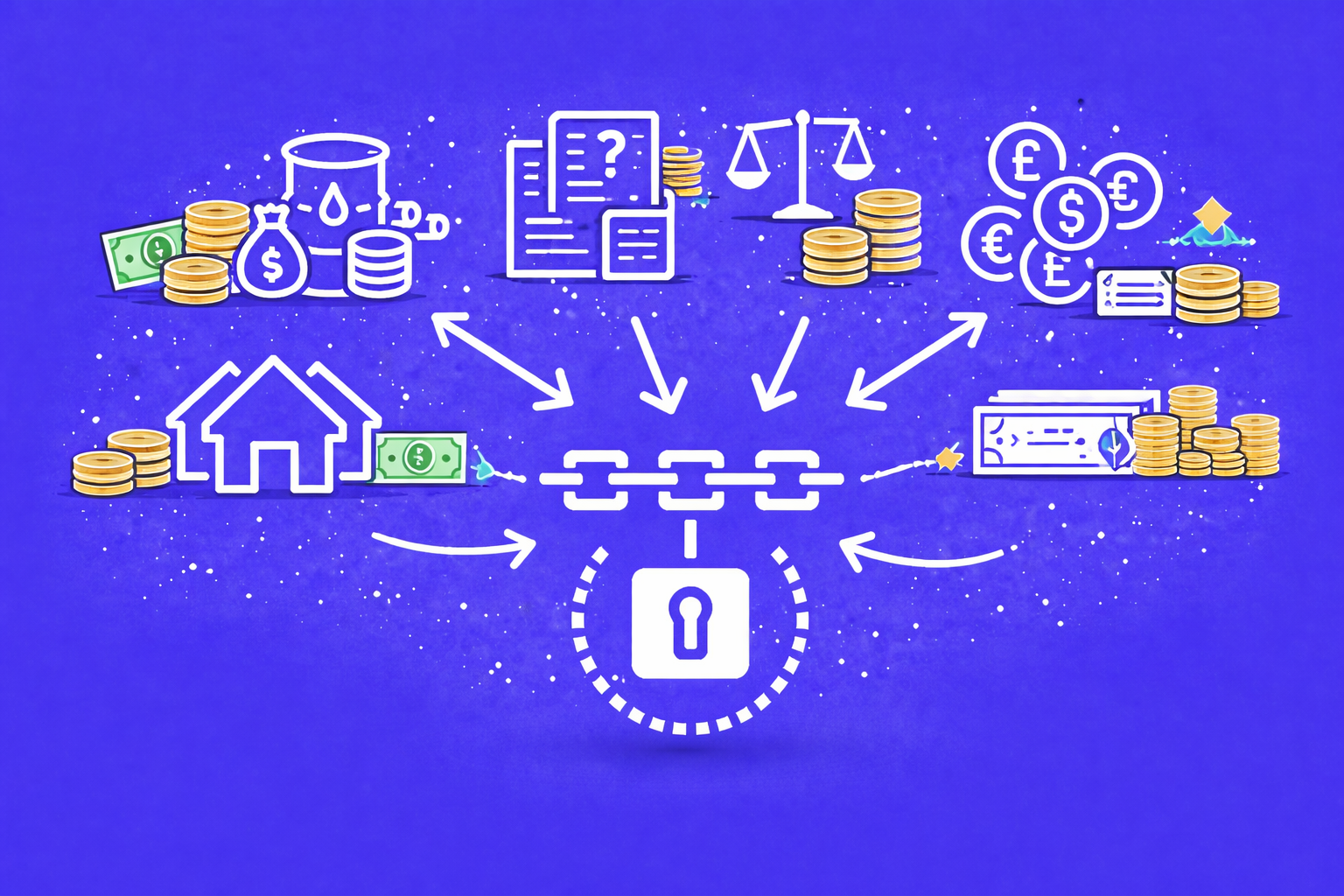
Now, even if the jurisdiction issue is resolved easily, there is another difficulty that remains. Namely, it is not always easy to classify income from tokenized assets.
Real-world assets generate a wide variety of income streams. For instance, tokenized bonds may produce periodic interest payments, while tokenized real estate can generate rental income that is distributed to token holders. At the same time, structured vehicles can produce distributions that resemble dividends or profit shares, and investors can also sell tokens on secondary markets and earn gains that way.
Naturally, different tax systems categorize these types of income differently. In fact, they often apply separate rates and reporting obligations to each of these categories. Thus, a challenge arises when tokenization starts blurring the underlying financial structure. For instance, a distribution that resembles interest from a technological standpoint might be treated as dividend income under the legal structure supporting the token.
Inconsistencies like these can create conflicting obligations for investors operating across borders. The income may be taxed as interest in one jurisdiction and as capital income or corporate distributions in another. Without standardized classifications, these assets create issues for investors and tax authorities alike.
There is also the issue of secondary market trading, which only complicates the situation. Namely, if each token transfer constitutes a taxable disposal event, investors have to track cost basis and calculate capital gains across multiple trades. Seeing as blockchain markets operate continuously and globally, this type of record-keeping can quickly become way too complex.
The Withholding Tax Dilemma
There is yet another level of complications with RWA tokenization. Namely, cross-border investment typically relies on withholding tax systems to ensure that governments collect revenue from foreign investors. It works rather simply: when income such as dividends or interest is distributed to investors abroad, intermediaries can withhold a portion of the payment and direct it to the relevant tax authority instead.
However, tokenized markets make this process quite difficult to administer. In many blockchain environments, asset issuers may not know who holds a token the moment income is distributed. After all, tokens can move quickly between wallets, exchanges, and decentralized platforms, making it difficult to identify the ultimate beneficiary.
In circumstances where there is no reliable investor identification, it is nearly impossible to apply the correct withholding rate. Tax treaties between countries often provide reduced withholding rates for investors residing in certain jurisdictions, but these benefits depend on verifying residency. If the identity of the token holder is unknown or obscured behind blockchain addresses, compliance becomes extremely difficult.
Then, there is also the question of responsibility. In traditional markets, intermediaries such as custodians typically handle withholding obligations. But in tokenized markets, it is not always evident whether the issuer, the platform, or the investor should bear that responsibility.
Reporting and Auditing Issues
As you already know, tax compliance is heavily reliant on accurate reporting. Governments depend on financial institutions and intermediaries to provide standardized records of transactions, income distributions, and asset holdings. These records are what allows tax authorities to verify whether investors have reported their income and gains correctly.
While blockchain offers a high level of transparency, that transparency does not solve reporting issues. A blockchain ledger can reveal that a token moved between two wallets, but it rarely shows the legal identity of the participants in the trade or the economic purpose of the transaction.
This lack of contextual information is a huge problem for auditors and tax authorities alike. After all, they need more data than what is recorded on-chain to determine whether a token transfer represents a trade, a collateral transfer, a liquidity provision, or simply a wallet movement.
Furthermore, investors can also hold tokenized assets across multiple wallets and platforms. Tracking cost basis, acquisition dates, and taxable gains across such fragmented records is significantly more complicated than in traditional securities markets.
So, as the tokenized RWA world expands, tax authorities will have to demand standardized reporting frameworks that are actually capable of bridging the gap between on-chain activity and off-chain legal documentation.
Regulators Need to Get Involved
Fortunately, it seems that regulators are finally starting to realize how many challenges tokenized RWAs introduce in terms of tax enforcement.
For one, without clear guidance, investors struggle to determine how to report income. That, in turn, increases the risk of unintentional noncompliance. At the same time, governments are wary of scenarios in which tokenized RWAs could bypass established cross-border tax frameworks. After all, if transactions occur entirely within a decentralized infrastructure, authorities might find it harder to monitor income flows tied to RWAs.
Now, some policymakers have started exploring regulatory approaches that incorporate digital identity systems, platform-level reporting obligations, and standardized disclosures for tokenized instruments. However, these frameworks are still very much in their early stages. In many cases, the pace of technological experimentation continues to outstrip the evolution of tax rules.
Conclusion
Typically, real-world asset tokenization is framed as a technological upgrade for global finance. While true to some extent, this stance neglects to acknowledge the slew of tax enforcement issues that arise from this concept.
Currently, real estate, bonds, and other traditional instruments remain embedded within national legal and tax systems. When these assets are transformed into tokens that circulate globally, the underlying regulatory assumptions do not simply disappear.
Instead, they collide with a financial infrastructure that moves and evolves much faster than the rules that govern it. Until tax authorities and regulators develop coordinated approaches to classification, reporting, and cross-border enforcement, tokenized RWAs will continue to operate in a complex and entirely uncertain tax environment.
Though things are looking up and regulators are doing their best to catch up to a system that keeps outrunning them, caution is still a must. One thing remains clear: clear regulatory frameworks are needed to unlock the full potential of RWA tokenization.
- Real-World Asset archive.
- The Board of the International Organization of Securities Commissions. (2025). Tokenization of Financial Assets.
- Financial Conduct Authority. (2025) Bridging the Adoption Gap: Aligning Digital Asset Offerings with Buy-Side Requirements.
- Mafrur, R. (2025). Tokenize Everything, But Can You Sell It? RWA Liquidity Challenges and the Road Ahead.
This site may reference or link out to external websites operated by third parties. These sites are independent from ADABA, and ADABA has no control over their content or activities. A link or mention should not be interpreted as an endorsement, partnership, approval, or recommendation of any third-party provider, nor does ADABA take responsibility for any of the products, services, or information they offer.
All content provided here is for general informational purposes only. Nothing in this material constitutes legal, tax, financial, or investment advice. Readers should seek guidance from qualified professionals before making decisions in any of these areas. ADABA accepts no liability for actions taken—or not taken—based on the use of the information provided here.
ADABA makes no representations or warranties regarding the accuracy, completeness, timeliness, or reliability of the information presented. We disclaim any responsibility for losses or claims arising from errors, omissions, or other issues contained in this material.